open menu

Universe

Earth’s oldest asteroid impact crater may just have been found
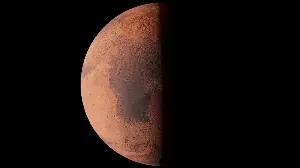
Sunsets on Mars glow blue rather than red, because the fine dust suspended in its thin air scatters sunlight so that the blue gathers into a halo around the setting sun while the rest of the sky stays yellow and orange, leaving the planet that looks rusty all day to end it with a cool blue glow.
Could the Earth really be flat?
Stargazing Wonders: A Complete Guide to the Most Spectacular Astronomical Events Happening Throughout the Year
How The Mighty Oceans Quietly Control Weather Patterns And Shape Our Daily Lives
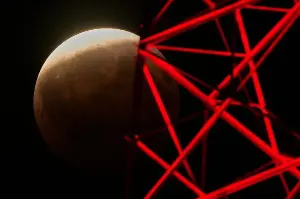
There is no permanently dark side of the Moon. The far side gets sunlight just like the near side — we simply don’t see it from Earth because the Moon is tidally locked, taking about as long to spin once as it does to orbit us once.
Astronomers propose space ‘airbags’ to shield Earth from massive solar storms
Astronauts aboard the International Space Station can see flashes of light even with their eyes closed — not from light entering the eye, but from high-energy space particles passing through their body and triggering the retina or visual pathway directly.
One of the sky's rarest phenomena is back: How to see rare night-shining clouds this summer
The Moon looks white in the night sky, but its surface is closer in color to a worn asphalt road — and it appears bright enough to read by on a clear night not because the surface is bright, but because the Moon is so close and fully sunlit that even a surface reflecting just 12 percent of incoming light becomes one of the brightest objects in the sky
Mercury is not the hottest planet in the solar system despite sitting closest to the Sun, because Venus traps so much heat under its thick atmosphere that it stays hotter day and night.
From Ripples To Giants: The Fascinating Physics Behind Ocean Waves And Their Energy Journey
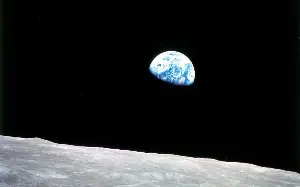
At its birth, Earth had no Moon. Then something perhaps the size of Mars slammed into the young planet, flinging molten debris into orbit that became the companion world now pulling our tides, steadying our seasons, and perhaps helping make Earth stable enough for life to flourish.
Unlocking Cancer’s Power In The Workplace: Loyalty, Sensitivity, And Team Spirit Unveiled
Some climate models suggest Venus could once have had liquid water and habitable temperatures, until a dramatic transformation hundreds of millions of years ago. One leading idea is that widespread volcanic resurfacing helped push the planet into the runaway greenhouse state that left it hotter than Mercury today.
New evidence suggests Saturn’s rings are younger than the dinosaurs — and for most of the planet’s history, the Saturn you picture may never have existed
First detection of magnetic fields on exoplanets.
Top 5 Career Paths Where Cancer’s Intuition And Sensitivity Shine Above The Rest
The icy surface of Europa is constantly crystallising and reforming in different places at different rates and the James Webb Space Telescope has only just caught it happening
The leading explanation for how the Moon was born is that a world the size of Mars called Theia slammed into the young Earth and flung out the debris that became the Moon, and recent research suggests Theia itself never fully left, with two continent-sized blobs buried near our planet’s core possibly being the last remains of the world that struck us.