


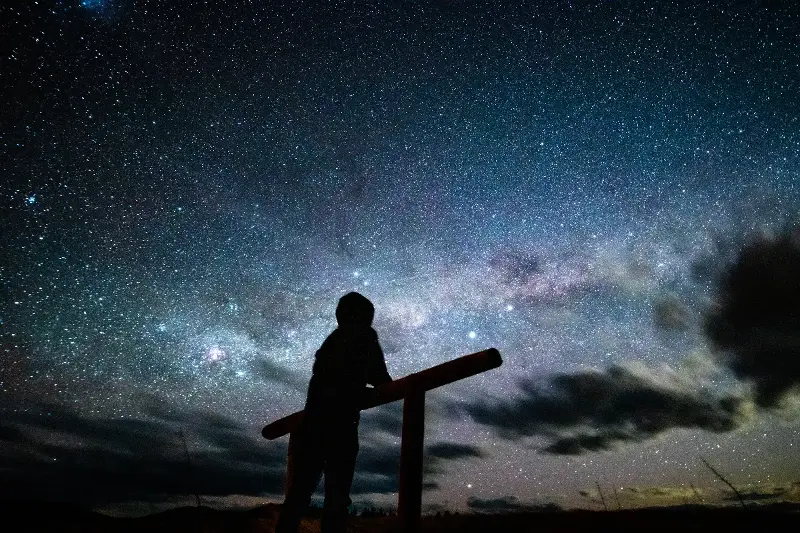
Stargazing is one of the most accessible ways to explore science. You do not need a telescope, advanced knowledge, or a remote observatory to begin. On a clear night, the human eye can see several thousand stars under dark skies, alongside planets, satellites, meteor showers, and the hazy band of the Milky Way. Autumn is an especially rewarding season for beginners in the Northern Hemisphere, bringing earlier darkness, comfortable temperatures, and crisp air that makes the sky appear strikingly sharp.
The key is to approach the night sky with patience. Your eyes need time to adapt, and the most memorable discoveries often come from simply looking up long enough to notice what is moving, what is twinkling, and what remains steady among the stars.
Why Autumn Skies Offer Exceptional Clarity
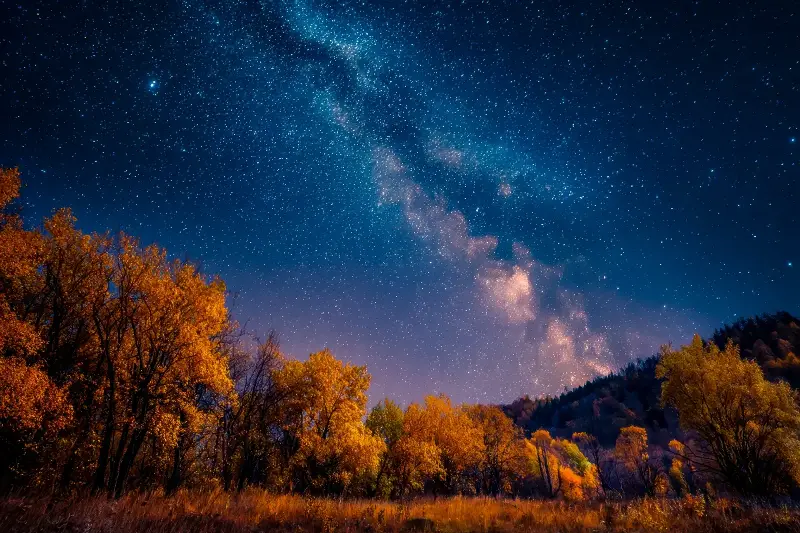
Clear autumn nights often feel unusually transparent because cooler air holds less moisture than warm summer air. Water vapor, haze, and humidity scatter light and soften the appearance of stars. When a cold, dry air mass arrives after a weather front, the sky looks darker and more sharply defined.
Autumn also offers several practical advantages for observers:
- Earlier darkness: The sun sets earlier than in summer, making it easier for families, students, and early sleepers to observe without staying up past midnight.
- Manageable temperatures: Evening temperatures remain comfortable with just a warm coat, hat, and blanket.
- Optimal viewing windows: The week around a new moon provides the best conditions for viewing faint celestial objects when the moon is below the horizon.
Beginning With Naked-Eye Observations
Before investing in equipment, spend several evenings learning the sky with your eyes alone. This helps you understand the scale of constellations and makes locating objects much easier later on.
To maximize your initial observing sessions, keep these steps in mind:
- Protect your night vision: Choose a safe observing spot away from direct lighting. Turn off outdoor lights and avoid looking at bright phone screens.
- Allow adaptation time: Your eyes take 20 to 30 minutes to become fully dark-adapted. If light is necessary, use a dim red flashlight, which affects night vision far less than white or blue light.
- Distinguish stars from planets: Stars generally twinkle as their light passes through Earth’s atmospheric currents. Planets usually shine steadily because they appear as tiny disks rather than pinpoint sources.

Identifying Autumn Constellations and Seasonal Sights
In the Northern Hemisphere, autumn evenings feature several reliable landmarks that act as sky guides:
- The Great Square of Pegasus: Formed by four bright stars, this large, tilted square sits high in the evening sky and serves as a starting point for navigation.
- The Andromeda Galaxy: Located along a chain of stars extending from Pegasus, this is the nearest large galaxy to the Milky Way. Under dark skies, it appears as a faint, misty patch whose light has traveled roughly 2.5 million years to reach your eyes.
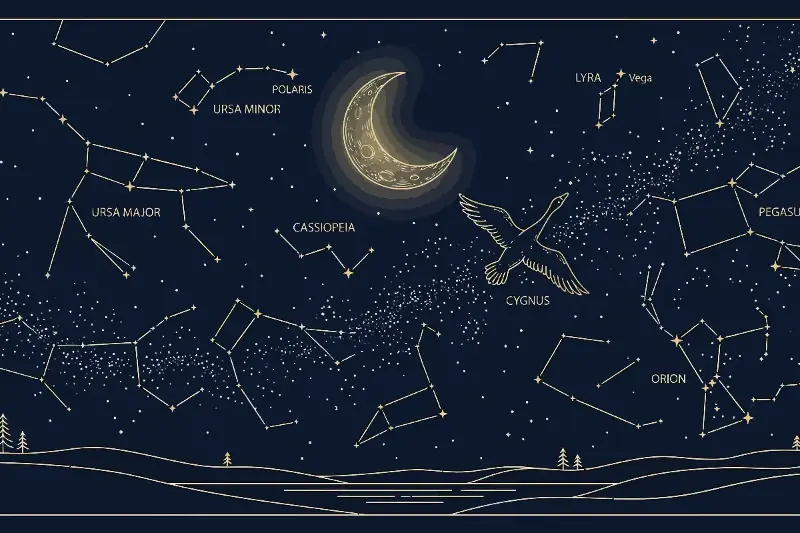
- Cassiopeia: Shaped like a broad letter W or M, this constellation sits near the north celestial pole and helps locate the star-rich fields of the Milky Way.
Choosing Helpful Beginner Tools
A simple star map or astronomy app with a red-light mode can make your first sessions much easier. However, use digital tools sparingly so you do not interrupt the slow, rewarding process of learning star patterns manually.
When you are ready to upgrade your view:
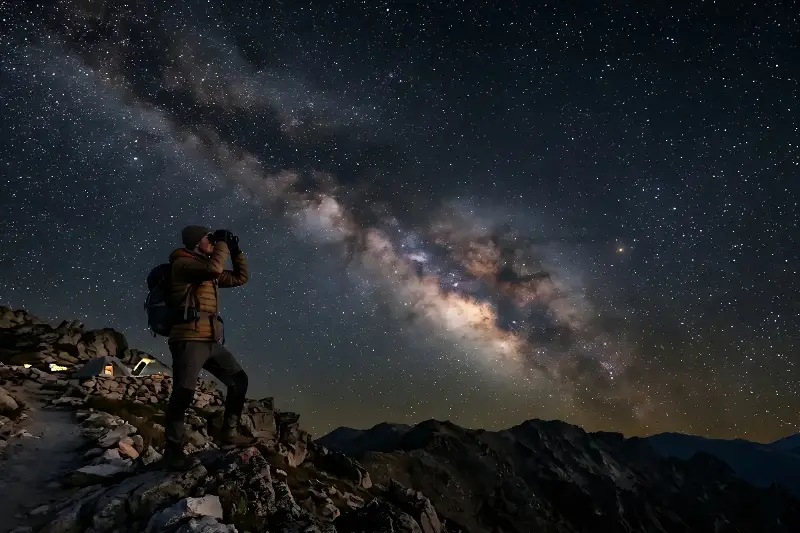
- Start with binoculars: A pair marked 7x50 or 10x50 reveals bright star clusters, distant moons around Jupiter, and faint nebulae while remaining portable and easy to hold.
- Progress to simple telescopes: Small tabletop reflectors or beginner refractors provide satisfying views of the moon's craters, Saturn's rings, and bright star fields.
Making Stargazing a Lasting Habit
Keep a simple observing notebook to record the date, time, location, weather, and objects spotted. Over several weeks, you will notice that stars rise about four minutes earlier each night, causing the evening sky to shift gradually with the seasons.
Autumn rewards steady observation. One clear night may reveal a familiar constellation, while the next brings a bright planet, a passing satellite, or a brief meteor. The sky asks only for a clear view, a little time, and the willingness to look up.