Education
AI Is Reshaping Classrooms. Are India's teachers getting the support they need?
Why do stars appear different colors in the night sky?
Earth’s largest waterfall is hidden underwater in the Denmark Strait between Iceland and Greenland, where dense cold water plunges about 3,500 meters down the seafloor, far exceeding any waterfall on land in drop height and volume
The oxygen in Earth’s atmosphere is essential to almost every animal alive today — but when it first started accumulating in the air roughly 2.4 billion years ago, it triggered the most lethal pollution event in the planet’s history, wiping out the vast majority of species alive at the time, in what biologists now call the Great Oxidation Event
The Human Genome Project was declared complete in 2003 — but about 8% of human DNA was still missing, including some of the regions most critical to chromosome stability and immunity, and it took another nineteen years to finally read it all
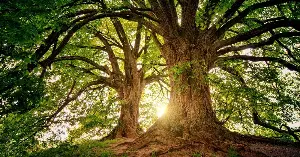
By 2025, a 4,800-year-old bristlecone pine named Methuselah in California’s White Mountains remained the oldest known non-clonal living tree, and the exact location of the gnarled, wind-stunted survivor is kept secret by the US Forest Service to protect it from vandals and souvenir hunters.
Scientists finally unravel the mysteries of a pianist’s ‘touch’ after measuring hand and finger movements with "microscopic spatial precision"
There are more trees on Earth than stars in the Milky Way. A major global estimate put the planet’s tree count at about three trillion, while NASA gives the Milky Way’s star count as roughly 100 to 400 billion.
Full list of London schools closed or shutting early due to heatwave as red weather warning issued
Seven miles beneath the Pacific Ocean, in the deepest place on Earth, American explorer Victor Vescovo descended in 2019 to a depth where the pressure equals 50 jumbo jets stacked overhead — and at the bottom of the Mariana Trench, where no light has ever reached, he found a plastic bag and several candy wrappers waiting on the seabed.
Your own voice sounds different to other people than it sounds to you, because the version you hear is reaching your inner ear partly through the bones of your skull, which amplify lower frequencies that everyone else cannot hear — and the recorded version that strikes most people as alien when they first hear it is in fact the only version of their voice anyone else has ever known
The Magic of Rainbows: The Science Behind Why We See Colors in the Sky
The notebooks Marie Curie used in her research remain radioactively contaminated more than a hundred years later. Some Curie papers have been found contaminated with radium-226, an isotope with a half-life of about 1,600 years, and original volumes are kept under strict radiation-protection controls before anyone can handle them.
Quote of the Day by motivational speaker Brian Tracy on discipline: ‘Your life only gets better when you get better’
The Pacific Ocean is so vast that it’s larger than every continent on Earth combined — and there’s a single straight line you could sail through it for nearly 20,000 miles without ever touching land
CBSE rejects Rahul Gandhi's ‘erroneous, misleading' allegations over Coempt Edu Teck contract
Why skills will power India’s journey to Viksit Bharat@2047
In the age of AI, India must raise ‘reimagineers’
IITian unable to land job after graduation seeks advice on PhD versus industry career
A volcano in Ecuador called Chimborazo sits closer to outer space than Mount Everest does, not because it is taller, but because the Earth bulges at the equator and Everest, further from that bulge, is actually deeper inside the planet.