


On June 10, NASA announced the primary and reserve crew members for the Artemis III mission, marking a new milestone in the program to return humans to the Moon and preparing for future landings on the Moon's South Pole.
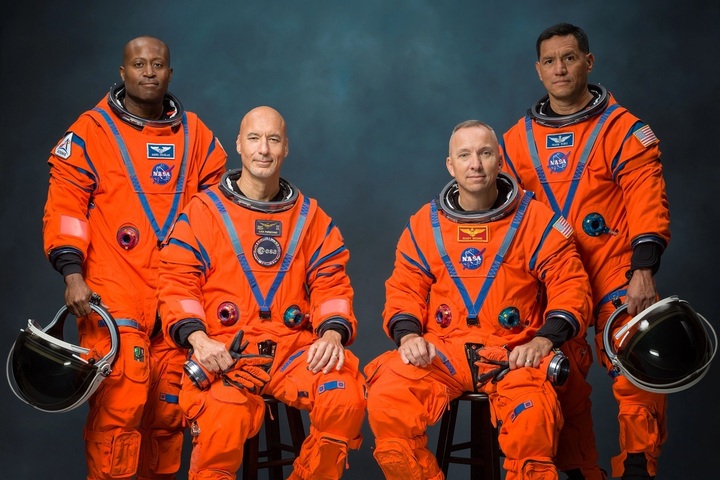
The Artemis III crew, from left: Andre Douglas, Luca Parmitano, Randy Bresnik, Frank Rubio. (Photo: NASA)
The main crew consisted of four members: NASA astronaut Randy Bresnik as commander, and European Space Agency (ESA) astronaut Luca Parmitano as pilot.
The two mission specialists were Andre Douglas and Frank Rubio of NASA. Astronaut Bob Hines was designated as a reserve member.
This also marks the first time an ESA astronaut has been assigned to an Artemis mission.
"Artemis III will demonstrate the power of American innovation and international collaboration as we test spacecraft docking and rendezvous and develop technologies that could take humans deeper into the Solar System," said NASA Administrator Jared Isaacman.
Experienced crew
Commander Randy Bresnik will be undertaking his third space flight. The former U.S. Marine Corps colonel has served on the Atlantis space shuttle mission and the Soyuz missions to the International Space Station (ISS). He has over 7,000 flight hours on 95 different aircraft.
Pilot Luca Parmitano is also a highly experienced pilot with two previous flights to the ISS. In 2019, he became the first Italian and the third European to command the space station.
Frank Rubio rose to fame after setting the record for the longest space flight by an American astronaut, spending 371 consecutive days in orbit from 2022 to 2023.
Meanwhile, Andre Douglas will be making the first space flight. Previously, he has been involved in projects developing autonomous vehicles, space exploration systems, and underwater defense technology.
The most complex manned flight mission
Artemis III is scheduled for 2027 and is considered one of the most complex manned spaceflight missions in recent history.
The flight will conduct a series of tests in Earth orbit to check the interoperability between NASA's Orion spacecraft and the lunar landers developed by Blue Origin and SpaceX.
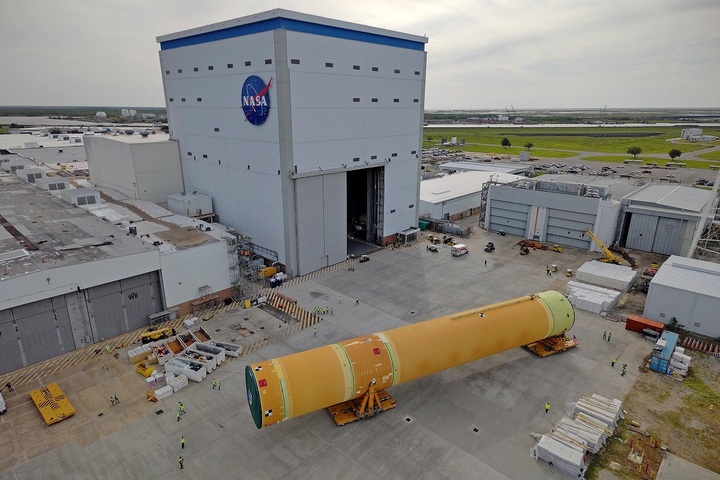
NASA transported the core stage of the SLS rocket for the Artemis III mission from the Michoud Assembly Facility to the barge Pegasus in New Orleans on April 22. (Photo: NASA)
According to the plan, the Space Launch System (SLS) rocket will carry the Orion spacecraft and its crew into Earth orbit from the Kennedy Space Center in Florida.
After completing system testing, Orion will for the first time attempt to approach and connect with the test versions of the lunar lander being developed by Blue Origin and SpaceX.
The mission will involve multiple consecutive launches using some of the world's most powerful rockets currently available. NASA will test the coordination between Orion and the landing craft, from the control software and communication systems to the engines and interfaces.
Artemis III is considered an important preparatory step before Artemis IV, the mission expected to take humans to the South Pole of the Moon in 2028.
The testing process involves collaboration between Orion, Blue Moon, and Starship.
According to NASA, Blue Origin's Blue Moon lander will be launched into orbit first and wait for the crew.
The Orion spacecraft, carrying astronauts, will then be launched by an SLS rocket and connect with Blue Origin's lander for about two days to test the technology, including the astronauts transferring to the lander.
Once testing with Blue Moon is complete, Orion will detach from the lander and wait for SpaceX's Starship.
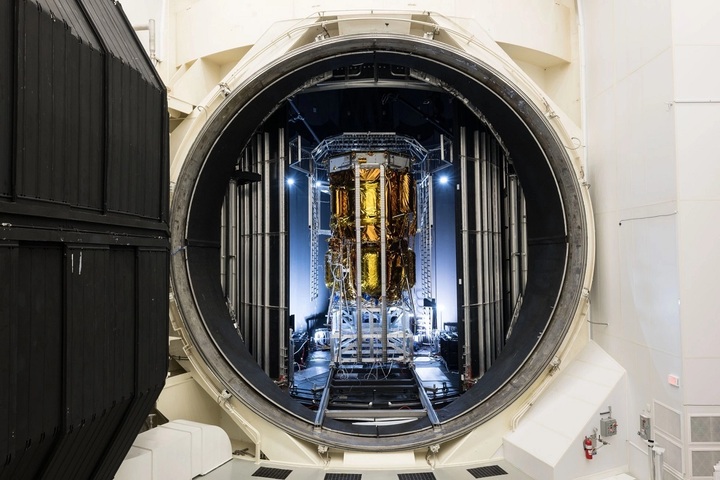
Blue Origin's Blue Moon Mark 1 lunar lander completes testing in Thermal Vacuum Chamber A at the Johnson Space Center, May 2026. (Photo: NASA)
A test version of Starship will then be launched into orbit to meet Orion. The two vehicles will dock for about a day to test the systems before the crew returns to Earth.
The entire mission was expected to last about two weeks, culminating in a landing in the Pacific Ocean and subsequent recovery by the U.S. Navy in coordination with NASA.
Preparation progress
NASA says preparations for Artemis III are being accelerated.
This summer, engineers will connect the Orion spacecraft's crew module and service module, and integrate the new connectivity system that will be launched into space for the first time.
Orion's heat shield is also being finalized following ultrasonic testing of each individual material block.
Meanwhile, the assembly process for the SLS missile is also underway. Technicians are integrating the main body with the engine compartment before installing the four RS-25 engines this summer.
Blue Origin is currently developing a crewed version of the Blue Moon lander, while SpaceX is developing a lunar landing version of Starship. Both companies are building test vehicles for Artemis III with direct technical support from NASA.
NASA says Artemis III will continue to pave the way for larger-scale lunar exploration missions, aiming to establish a permanent human presence on the surface of Earth's natural satellite and prepare for future crewed flights to Mars.