


In the world of indoor plants, some beauty comes from their smallness and delicate nature. But there is also another kind of beauty, one that comes from overwhelming grandeur and primal vitality. That is the beauty of giant leaves.
If you're looking for a green statement for your living space, nothing is more impressive than these two names: Alocasia macrorrhizos and the magnificent Philodendron "Dean McDowell" hybrid.
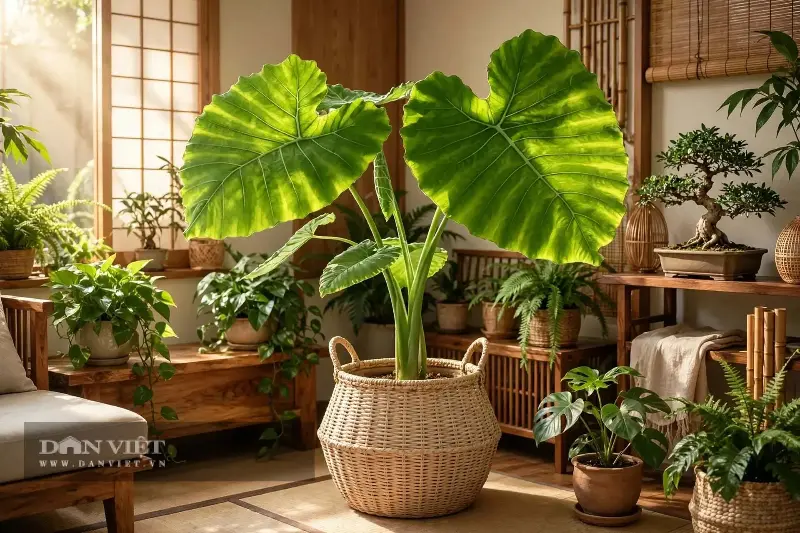
1. Elephant Ear Plant : The Guardian Deity of the Home
The captivating, pristine beauty
Elephant's Ear, scientifically known as Alocasia macrorrhizos, belongs to the Araceae family. It is native to tropical monsoon climates and grows wild abundantly on hillsides and along damp streams in Vietnam, Laos , and Cambodia.
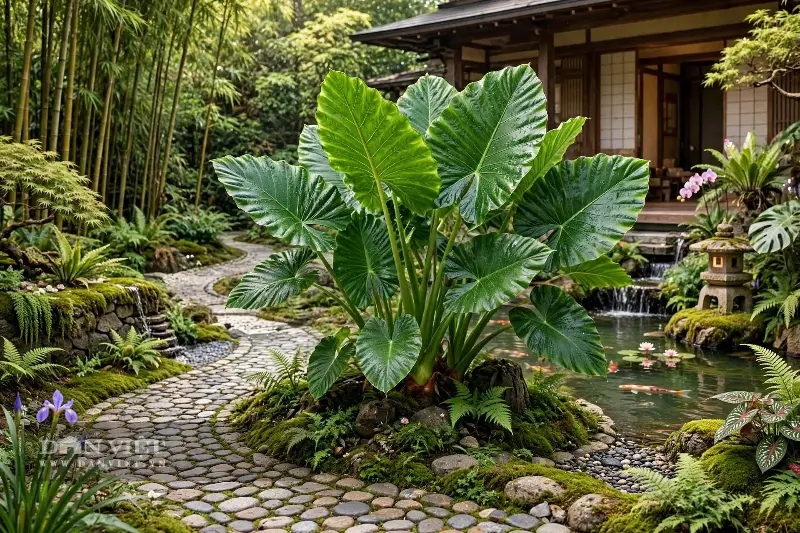
The beauty of this bonsai tree lies not in its flowers, but entirely in its leaves. Each leaf is a masterpiece of nature. The broad, heart-shaped leaf blades, reaching 80-120cm in length, spread wide like elephant ears truly listening to the breath of the house.
The upper surface of the leaf is dark green, glossy as if coated with a layer of wax, and feels plump and vibrant to the touch. The underside is slightly lighter. What gives the leaf its soul is its vein system.
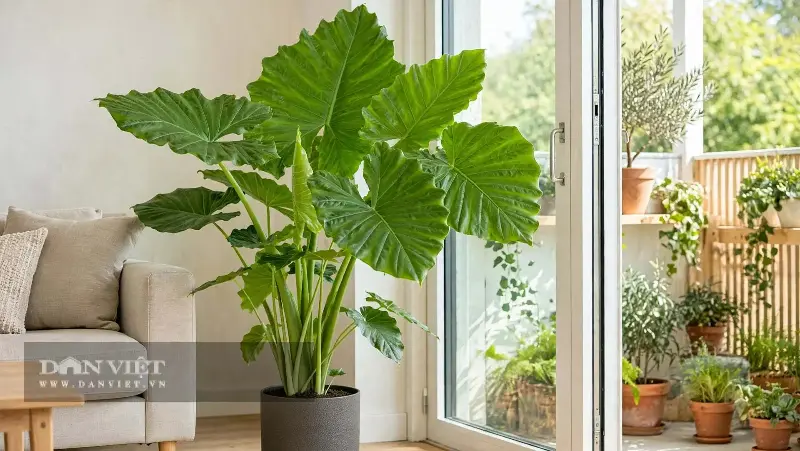
The main vein is large and prominent, like a spine, from which radiate evenly spaced secondary veins, intricately interwoven like a map of an ancient forest. When light shines through, the entire leaf resembles an emerald green pane of glass, its veins proudly displayed.
Simply placing a pot of elephant ear plant in the corner of the living room, next to the sofa, or in the office instantly transforms the space into a miniature tropical rainforest.
Ornamental plants bring a sense of coolness, tranquility, and elegance that no small-leaved plant can provide. It is the beauty of shelter and tolerance.
Practical value: A living air purifier.
Before discussing feng shui, elephant ear plant is already an irreplaceable "assistant" for health.
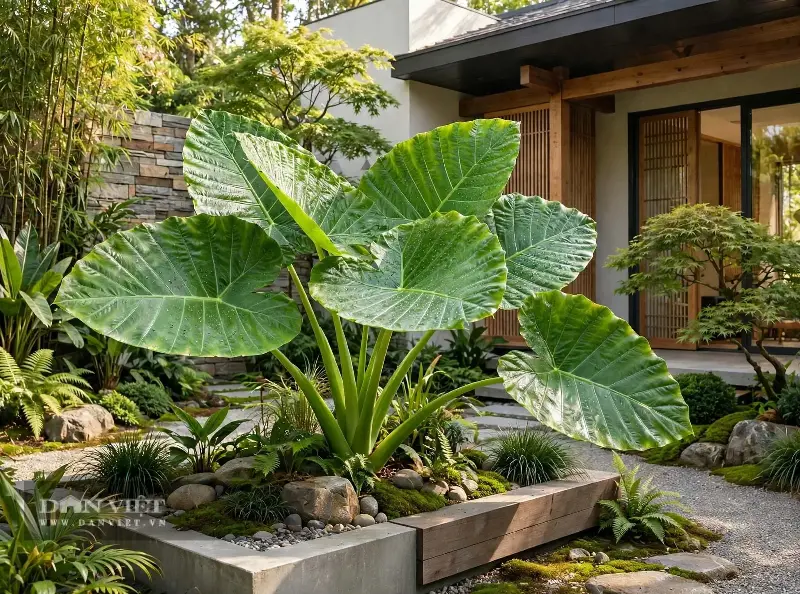
Its leaf surface area far exceeds that of common pothos, snake plant, or spider plant. The enormous leaf surface, with millions of tiny stomata, acts like a biological vacuum cleaner, absorbing fine dust particles suspended in the house.
In particular, houseplants are capable of effectively absorbing and breaking down toxic volatile organic compounds such as formaldehyde, toluene, and xylene, which are emitted from wall paint, new furniture, and adhesives. Therefore, houseplants are extremely suitable for newly built houses, apartments with poor ventilation, or bedrooms.
In the autumn and winter in the North, or when we run air conditioners continuously in the South, the air inside the house becomes dry, causing cracked skin and a sore throat.
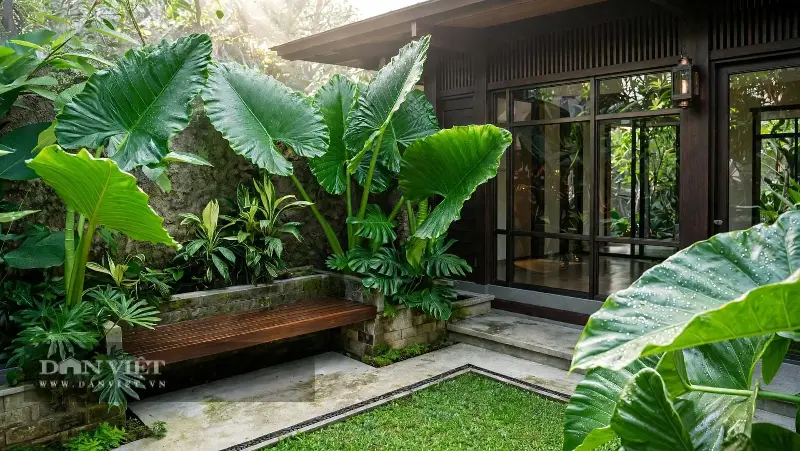
This houseplant silently releases a significant amount of moisture through transpiration from its leaves, acting as a natural, quiet, and energy-efficient humidifier. Placing one indoors will make the air feel softer and easier to breathe.
And good news for beginners: Elephant ear plants are incredibly hardy. Many people worry that plants with large leaves are difficult to care for, but on the contrary, they are very easy to care for. They prefer diffused light, avoiding direct sunlight that can burn the leaves.
The soil only needs to be loose, well-drained, and retain moisture evenly. It can adapt well to both the warm, sunny South and the cold winters of the North, just avoid letting the temperature drop below 10 degrees Celsius for too long.
Feng Shui meaning: Gathering wealth, preserving blessings, and promoting family prosperity and business success.
In feng shui, the shape of a plant is the language of its energy. With elephant ear, its meaning comes from the sheer size and sturdiness of its leaves.
According to folk beliefs, large leaves are where energy accumulates. The bigger, greener, and fuller the leaf, the stronger its ability to attract wealth and prosperity.
The elephant ear leaves spread wide like the hand of Buddha receiving blessings from heaven, symbolizing "great family and great business" - a large family with many children and abundant blessings, and a thriving and expanding business.
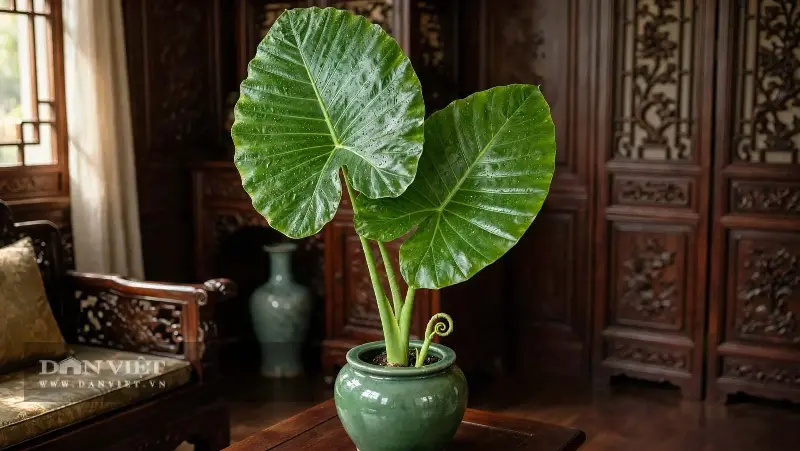
Furthermore, its leaves grow in layers, spreading out from the center, each layer protecting the one in front, symbolizing unity, protection, and a stable, solid family foundation where descendants gather together.
The thick, upright trunk of the ornamental plant symbolizes resilience and a strong will to succeed. Placing a large elephant ear plant in the living room, in the auspicious location – the corner diagonally opposite the main door – is believed to help the homeowner retain wealth, ensure career success, and bring peace to the family.
Giving a potted elephant ear plant to a friend for their housewarming is also the best wish: May their new home always be full of life, prosperity, and good fortune.
2. Philodendron gloriosum: A masterpiece of forest art.
If the elephant ear plant embodies the beauty of grandeur and magnanimous generosity, then Philodendron gloriosum represents the beauty of nobility, artistry, and absolute elegance. This ornamental plant belongs to the Araceae family.
Beauty that touches the senses.
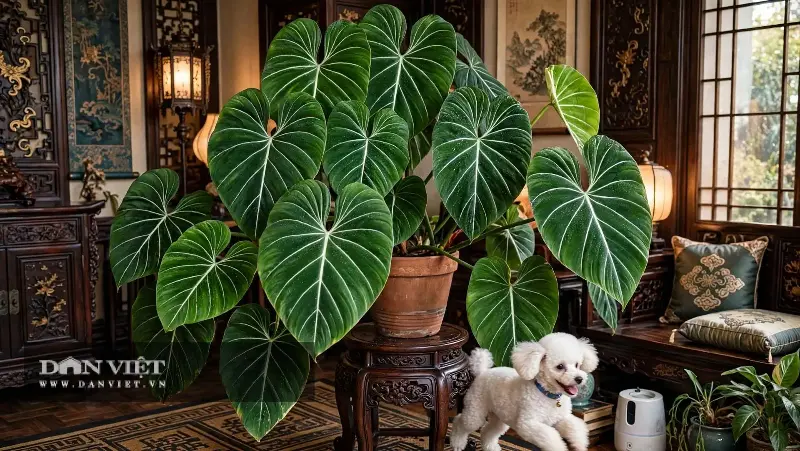
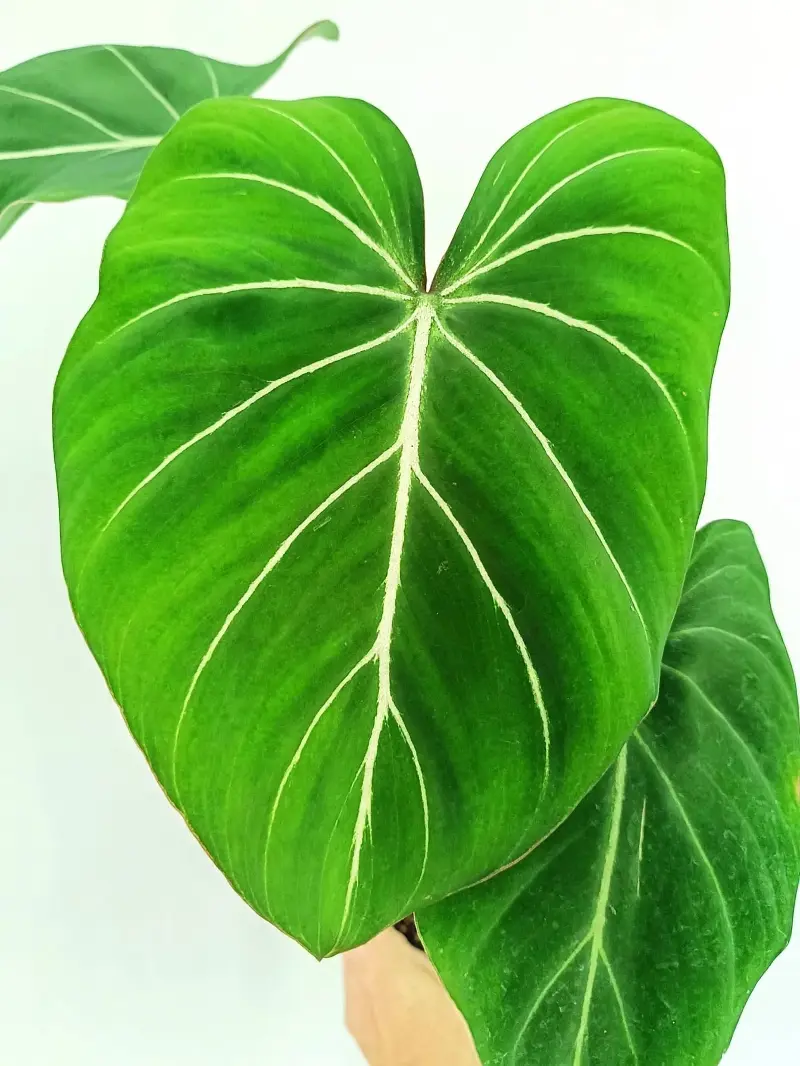
The first thing that takes your breath away when standing in front of Philodendron gloriosum is its leaf. The leaf blade is perfectly heart-shaped, round, full, and without any lobes or edges.
A mature leaf can easily reach a diameter of 50-70cm, or even more, much larger than a human face.
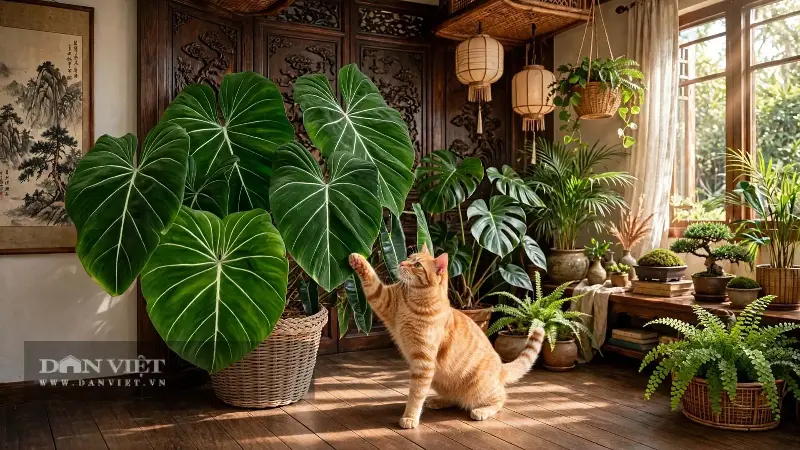
But the most amazing thing lies in the texture of the leaves. The leaves aren't glossy like elephant ear leaves, but are covered in a smooth, velvety layer, like high-quality black velvet.
Its green color is not ordinary green, but a deep, dark green, sometimes leaning towards a mysterious blackish-green. When light shines on it, it shimmers with a mesmerizing copper or silver hue. Touching the surface of the leaves, you will feel as if you are touching an expensive velvet carpet.
And the soul of Philodendron gloriosum lies in its leaf vein system. If the leaves of the Elephant's Ear plant are a map of the jungle, then the leaf veins of the Philodendron gloriosum are a work of art painted with sharp white brushstrokes.
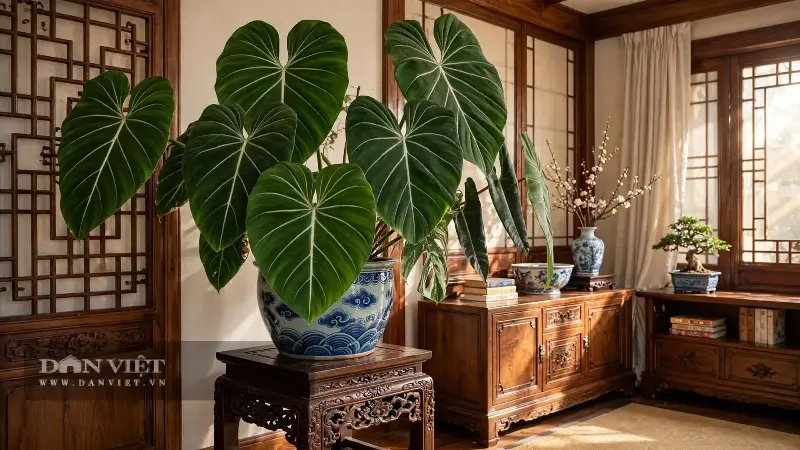
The prominent silvery-white and pale pink veins run from the leaf stalk outwards across the leaf blade like lightning bolts, like the blood vessels of the earth.
The contrast between the velvety black foliage and the white veins creates a beauty with depth, both classic and modern. In the world of ornamental plants, this bonsai tree is called the "most artistic, most impressive" type of bonsai.
The Feng Shui meaning of the giant velvet leaf
While elephant ear plant (Rhododendron gloriosum) embodies the energy of expansion and envelopment, Philodendron gloriosum carries the energy of refinement, elegance, and wisdom.
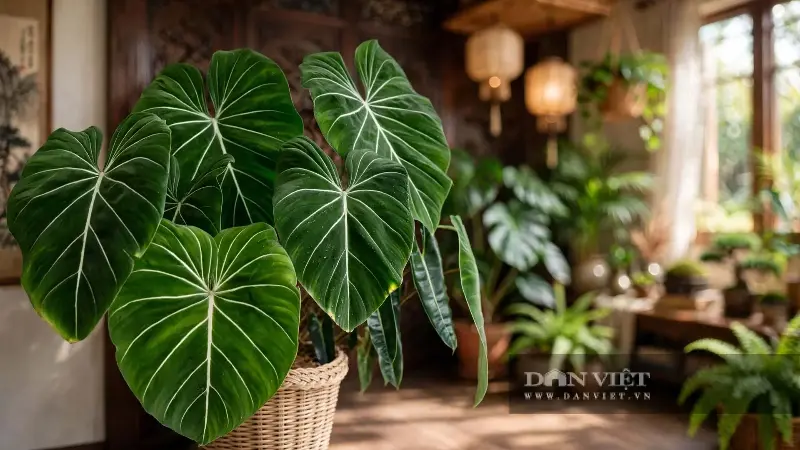
In feng shui, the heart shape of a leaf symbolizes love, harmony, and compassion. A large, velvety heart-shaped leaf placed in the home helps to harmonize relationships, reduce conflict, and bring warmth and love to family members.
The deep green color of the leaves belongs to the Wood element, but the mysterious, velvety black color represents the Water element. Wood nourishes Water, and Water nourishes Wood, creating a continuous cycle of mutual generation, which is excellent for activating intelligence, creativity, and peace of mind.
Placing this plant in your study or reading room will help you concentrate, think clearly, and make wise decisions.
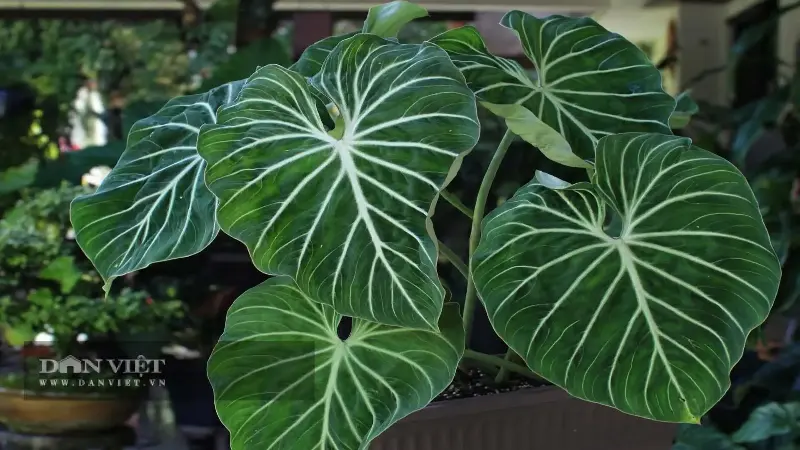
In particular, the distinct white veins spreading across the leaf surface are likened to clear, smooth, and prosperous paths of fortune. They symbolize guidance and enlightenment, helping the homeowner's career and business endeavors to be clear, smooth, and free from obstacles.
Philodendron gloriosum prefers a semi-shaded environment, but natural light indoors is sufficient. The only thing to note is that it is a purely tropical plant, very sensitive to cold, and the temperature should not be below 15°C, ideally between 20-28°C.
Simply keep it warm and well-moistened, and this plant will reward you with increasingly large and beautiful leaves.
Whether you choose the sturdy shelter of elephant ear plants or the elegant artistry of Philodendron gloriosum, you're bringing a vibrant tropical forest into your home.
These two ornamental plants are not only air purifiers and natural humidifiers, but also living feng shui items, silently accumulating positive energy, attracting wealth, and bringing peace and prosperity to the homeowner every day. That is the invaluable value that their giant leaves bring.