



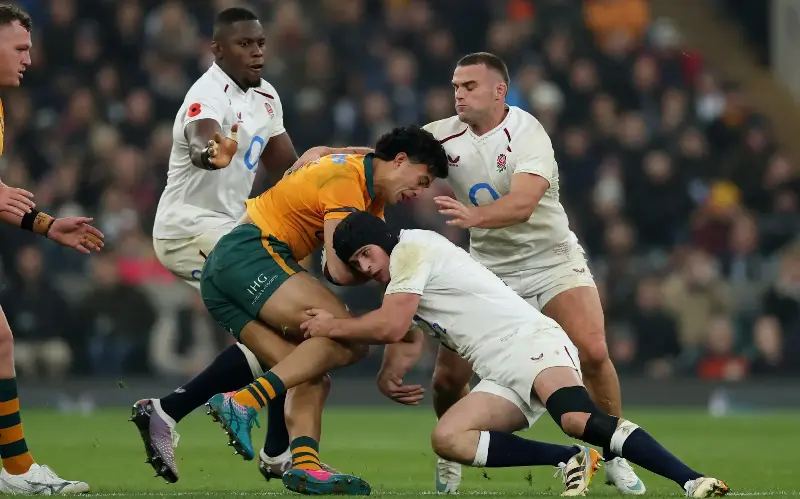
Almost everything we thought we knew about Steve Borthwick’s England was vanquished in 80 minutes. We thought they were ill-disciplined; we thought that the players’ hearts were not fully invested in the Borthwick project; we thought the attack might look clunky and disjointed, given it was their first Test since July; and we also thought that the running backs of Australia, some of the world’s best on paper, would challenge England defensively as strenuously as any side this autumn.
We were proven wrong on almost all charges. Here was England, back at the Allianz Stadium for the first time since the Ireland debacle in February, in as commanding and clinical form as they have been in 2026. The Wallabies were poor, granted, but England could only play what was put in front of them; and the visitors were obliterated. Even with a record score, England handed Australia two of their three tries and left a couple out there, too.
Of course, one swallow does not make a summer, but this was as comprehensive an autumn catalyst as any. The attack looked more cohesive than expected – seven tries tell their own story – but their display without the ball was equally significant. The attack was eye-catching and deserves plaudits, but England’s work with the ball has been on a steady upward curve since that historic defeat by Italy in the Six Nations in March. Spending time without the ball was the area which became England’s Achilles heel.
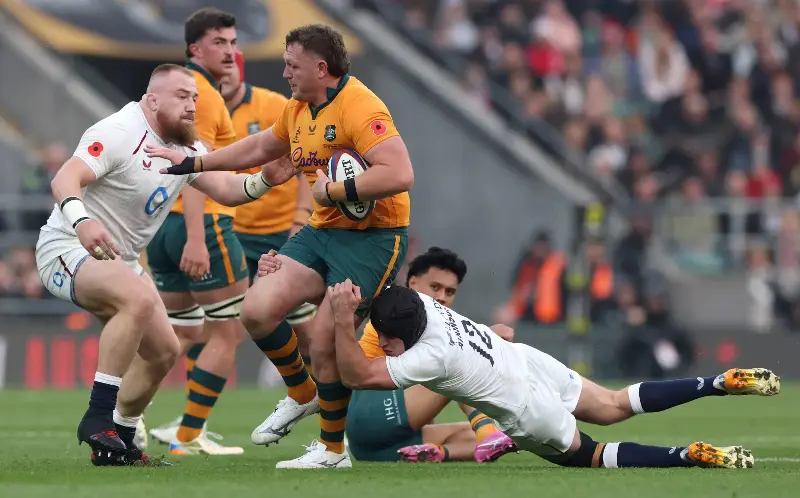
The victory against Australia was only the third time this calendar year England had conceded 22 points or fewer – and the other two were victories on these shores against Wales and Fiji respectively. On Friday night, Argentina’s Shaun Edwards-drilled defence shipped 42 points in Dublin and before then his Red Roses lost twice in Canada – their first defeats in four years. As glittering as Edwards’s record is, maybe England do not need him, after all?
As Borthwick highlighted after the victory, it is both Richard Wigglesworth, the senior assistant coach in charge of defence, and the players who are responsible. In the first half, England attempted 82 tackles, missed two, and two produced an offload. England’s tackle-success rate in the first half was north of 95 per cent. In a Test between two so-called tier-one nations, that is a major achievement.
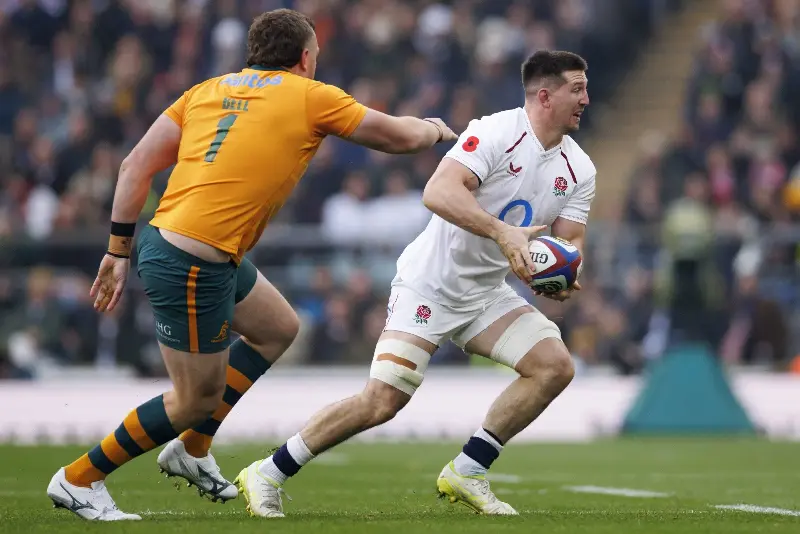
So, too, is the fact that Australia’s sole 22 entry and solitary line break in the whole of the first half came in the form of Max Jorgensen intercepting Jack van Poortvliet’s pass to score just before the interval. For 40 minutes, England went without allowing the Wallabies so much as a single stud in their 22. England made 22 dominant tackles to Australia’s five, and won nine turnovers. England were voracious to get off the line and whack or chop an opponent. Several times, particularly in the first half, Australia actually lost ground while recycling through phase after phase. Each time, an England defender was knocking them back from whence they came.
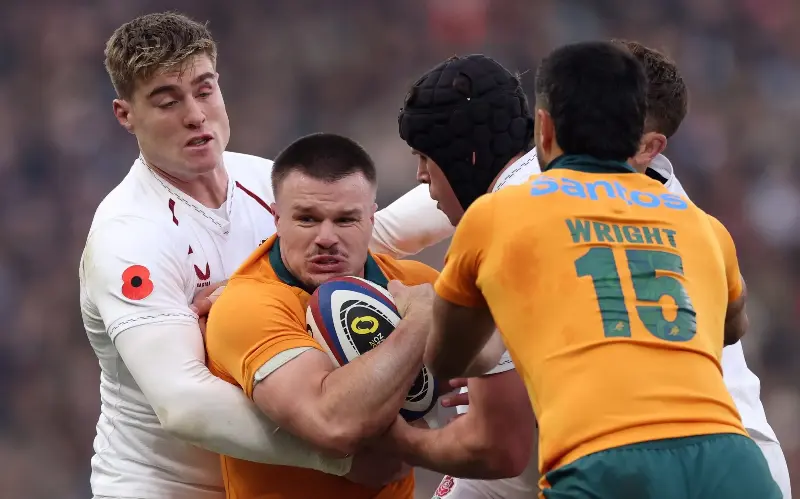
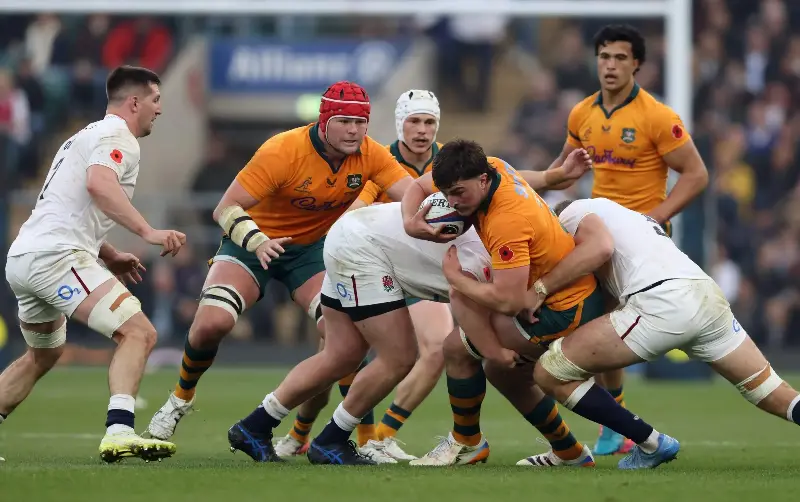
The players showed lots of determination but defence is more than that. There were technical aspects, too. How often did Maro Itoje, one of England’s standout players, catch an Australian man and ball behind the gain line? Itoje was not alone. This is an area which England have been targeting in training and will continue to prioritise. When teams pull back the ball behind the gain line, Wigglesworth wants England to keep going after them, again and again and again.
That happened on Sunday. And when England caught Australia behind the gain line, it meant that the Wallabies either had to kick possession back to the hosts, or it made it far easier for Ben Curry et al to attack the breakdown. Rugby at its simplest is a game about momentum and, if you have it, everything else becomes easier.
Borthwick does not often talk about defence without also highlighting discipline; and vice-versa. Sunday night was no exception. England have received 13 yellow cards and a red this year, statistics which have plagued their cause. Against Australia, England conceded seven penalties in the entire match, and only two were in their own half. Most importantly, however, there were no cards. And England managed to compete heavily at the Australian breakdown. Borthwick name-checked Curry’s impact in that facet.
“We said last week: there are two training sessions and I do not think we are going to get too much better as rugby players in that time,” said Borthwick after Sunday’s victory. “We are going to try and get organised and cohesive. This was a mentality thing – absolutely, 100 per cent. The players’ mentality was outstanding. They had an intent to go out and make themselves hard to score against. They did that. Richard Wigglesworth deserves enormous credit for driving that, and the players deserve even more for delivering. We would all accept – and I’m not saying this is good or bad, just an observation – that in the Prem, defence has been de-prioritised in comparison to attack. At Test level, you have to prioritise defence, and England did that.
“You have to get the ball back – and that pleased me today. We have talked a lot about discipline – and I hope we can talk a little less about that in the future – but if you let the opposition keep the ball for a long period of time, at some point there’s likely to be an offside penalty. Then, at some point, you’ll be in your 22. As soon as you’re in your 22, it’s likely that another decision goes against you. That’s when things like cards start to come. One focus is getting the ball back; Ben Curry added a huge amount there, and I thought the line speed was better. It forced more errors.”
Undoubtedly, Sunday was a step in the right direction for England – in all regards. But, without the ball, the goal for Borthwick, Wigglesworth and their players is to ensure that the first half against the Wallabies becomes the norm, and not an aberration.