



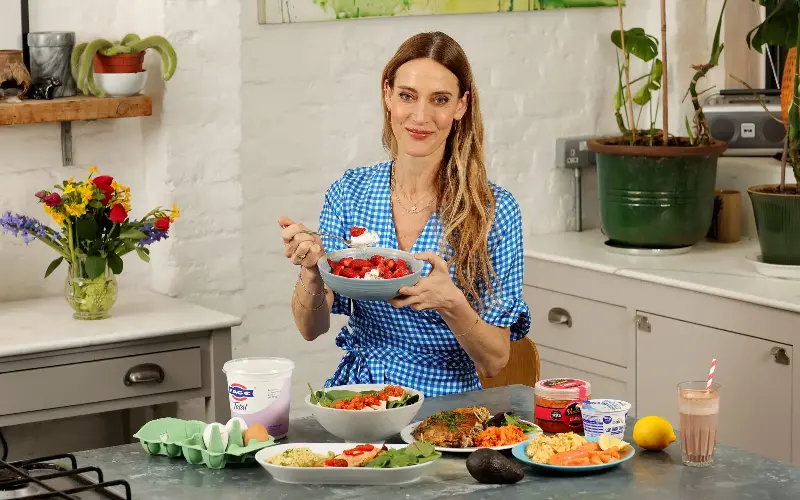
Last summer, I signed up for what I thought was a spot of midlife weight training, but turned out to be an entire remodelling of my body. I had no idea “recomposition” was even a thing until, 10 weeks after wibbling into my first split squat and filling the fridge with Fage Greek yogurt, I emerged as a stronger, svelter, springier version of myself. I’d lost my midlife muffin top and discovered some actual muscles.
With the help of a personal trainer, Caitlyn Haselgrove at Ultimate Performance, I embarked on a regime of weightlifting, water, steps and a 30 per cent calorie “deficit” that left me with an intake of about 1,600 calories a day.
Not just any 1,600 calories, though. Caitlyn introduced me to macros, a word that initially had me rolling my eyes as I pictured man-plates piled with silly amounts of steak and eggs.
Wasn’t a balanced diet the thing? Er, not when that balance involves liberal amounts of sugar, carbs and alcohol, as Caitlyn pointed out when I rattled off what-I-eat-in-a-day. I would be focusing less on wine and pasta and more on protein from now on.
And so I started eating according to a whole new algorithm. Reaching a protein goal of 150g a day (around 1g per lb of body weight) within a calorie budget invariably nudges you towards specific food choices, and I also learned to factor in volume, because when your calories are restricted, you want every last one to count.
After days of trial and error, I eventually settled into a rotation of high-protein whole foods, mainly simple meals that centred around one main ingredient that kept me sated – and safely within my calorie deficit. And despite eating what felt like more than on any diet I had done before, the weight fell off. 1st 8lb of it. In just 10 weeks.
Eating for body recomposition (simultaneously losing fat while gaining muscle) isn’t really a fad diet; it’s just lots of healthy foods in sensible quantities. It requires extra discipline because suddenly the world of grabbing a sandwich or relying on the free work croissant for breakfast has gone and you are left with quite a hefty shopping bill and the need for lots of Tupperware (I toted breakfast and lunch into work every day).
It also meant that many of my staples were off-menu, as they just didn’t deliver on protein or nutrients. But the food I was left eating felt rather luxurious (steak, smoked salmon, avocado, Greek yogurt…), and everything was delicious, if not copious.
Here are the 10 foods that took the edge off my hunger and helped me stay the course.
Greek yogurt breakfast bowl
Here, the strawberries are the thing: out of all the berries they give you most for your calorie/volume buck. Team with a couple of cups of black coffee for a voluminous start to the day: spoon 250g Fage 0% Greek yogurt into a bowl and top with 250g strawberries, 3g flaxseeds and 9g maple syrup; finish with a good sprinkling of ground sweet cinnamon. The flaxseeds add a healthy dose of fibre and help stabilise blood sugar.
Chicken breast salad
It was a lovely surprise to discover that lots of people I knew were on a similar bandwagon; they just didn’t shout about it. My friend Johnny cites this salad as one of his saviours as it’s quick, simple and delicious.
Empty 120g spinach into a bowl, then throw on a sliced chicken breast (150g) and top with a whole tub of supermarket salsa.
Caitlyn’s soya shake
The highlight of my workouts with Caitlyn (results aside) was the protein shake she made me afterwards. After my 10-week programme finished, I had a go at creating my own – it’s super-high in protein, filling and delicious.
- 100ml Alpro High Protein Chocolate Soya Drink
- 120ml low-sugar soya milk
- 30g frozen cherries
- 20g collagen powder
- 1tsp (3g) ground almonds
- Pinch of ground sweet cinnamon (or ½ tsp vanilla extract)
Blend all the ingredients with a small handful of ice for extra coolness and creaminess, and drink through a straw to make it last longer.
Speedy salmon pocket
Place a salmon fillet on a large piece of foil and fold up the edges. Add 100g cherry tomatoes (halved), some freshly chopped chilli, 20ml soy sauce, 100g asparagus spears, 1 sliced red pepper and 5ml sesame oil. Seal the foil pocket and cook in the oven at 200C for about 20 minutes. Serve with 120g couscous, plenty of green salad and a dollop of kimchi.
Steak and sides
Steak was my saviour when it came to eating out. It felt like a treat, complied with the regime and was often the best thing on the menu anyway. For home, I buy bavette or onglet as they’re relatively lean and the cheapest you can buy (at my butcher’s at least), and then I rustle up some sides, like you’d have in a restaurant.
Rub 150g bavette or onglet steak with 3g olive oil and season with lots of salt and pepper. Fry in a very hot pan for two minutes on each side and let it rest in foil for five minutes.
Meanwhile, fry 150g sliced mushrooms (I like to use a mix of oyster and chestnut), and 120g spinach in three squirts of olive oil spray, adding garlic, plus garlic powder for added oomph, dried chilli, salt and pepper to taste. Prepare a large green salad (lettuce leaves and spring onion) with 60g avocado, finished with lots of salt, pepper, lemon juice and coriander.
House omelette
Mushrooms are a volume/calorie win bar none and I loved the fact that by adding some egg white to the whole eggs, I could eat a frying-pan-size amount of food and still have calories left for dessert.
Mix three eggs and 100ml egg white in a bowl with a splash of cold water, adding salt and pepper to taste. Fry 150g mushrooms in 3ml olive oil and 5g butter, adding fresh garlic, garlic powder, a few dried chillies, a little salt and lots of pepper. Pour in the egg mixture and cook on a low heat, then once it’s nearly cooked through, crumble on 30g feta cheese and fold the omelette in half for the final minute or so of cooking. Sprinkle with parsley and serve with loads of green salad and kimchi.
Viral wrap
Instagram became a source of inspiration during my regime and I especially loved following Madeleine Rascan with her spirited banter and useful volume-focused recipes. “When you want something squidgy and carb-y but you also want to lose fat…” is her preamble for this wrap, which I fill with butternut squash.
Whisk the egg whites till stiff; meanwhile blend the two whole eggs with the cottage cheese, then stir the mixture into the egg whites, adding salt, pepper, oregano and garlic powder to taste.
Line a rectangular baking tray with parchment paper (you can use a few squirts of very light olive oil spray if you wish; it adds an extra three calories or so), then spread the mixture onto it. Bake for 20 minutes at 200 degrees centigrade. Meanwhile, roast or steam 150g butternut squash. Once the wrap is cooked, let it cool, then peel it off the parchment and lay it on a wooden board.
Spread with 30g low-calorie mayo, scatter a layer of baby spinach, then a layer of squash and feta cheese cubes, followed by plenty of black pepper, a squeeze of lemon juice and any chopped green herbs you like. Roll the whole thing up and cut in half, saving one half for a meal the next day.
Smoked salmon brunch bowl
The best thing about the diet was being able to eat so many foods that were already my favourites. All I had to do here was dial back the butter and make sure I weighed the salmon.
Melt 8g butter in a pan and add three large eggs, roughly mixed with 50ml whole milk, stirring them on a very low heat until beautifully scrambled. Pile onto your plate with 90g smoked salmon and serve with a green salad, kimchi and a wedge of lemon.
Sweet potato Buddha bowl
My daughter is an excellent cook who adapted one of her signature dishes to suit “mad Mummy’s crazy regime”. The star ingredient is the delicious roasted sweet potato, which wins because it is satisfying and lower in calories than your average carb.
This meal was my saviour from week six or so, when the novelty wore off, the weight loss slowed and I started dreaming in carbs.
Put 120g rice in a bowl and add: 120g sweet potato (cubed and roasted in 3g olive oil and a good sprinkling each of Chinese five-spice and cinnamon, plus a few dried chilli flakes); 50g spinach; 110g cooked chicken breast (sliced); 60g avocado; 100g steamed broccoli; 70g kimchi, topping it all off with 5g sesame seeds and lots of lemon and coriander (plus salt and pepper to taste).
Chia pudding
Chia seeds are uniquely good when you’re on a diet, as they’re lowest in calories of all the seeds, supremely high in fibre and they contain a respectable amount of protein.
I love making them into chia pudding – perfect for adding to a yogurt bowl for texture and taste variety, or eat it on its own with chopped fruit and date syrup. I’ve tried all sorts of iterations and this recipe makes the best: the coconut and cardamom is a real palate pleaser.
To make two portions, mix together 50g chia seeds, 150ml coconut milk, 1 level tsp cardamom powder, 1/2 level tsp ginger powder, 1/2 level tsp ground sweet cinnamon, pinch of salt. Place in the fridge for half an hour. Check for consistency, adding a splash of water if it’s too thick or a sprinkling of chia seeds if too thin. Stir thoroughly again, then leave overnight before serving as desired.