



Dear Alex,
We will soon be downsizing from a detached property to an apartment without an electric car charging point; our annual mileage will be even less than the current 6,000. I therefore plan to replace my year-old Hyundai Tucson plug-in hybrid. I’ve owned several large diesel saloons for years and have a hankering for another, although, as I’m in my 70s, an SUV suits my mobility issues better. I also need lots of space for golfing equipment. Some might think going back to diesel is a retrograde step, but they are superb on the road and have good economy. I’m thinking about a BMW X5 3.0d. What do you reckon – and how much should I pay?
– HT
Dear HT,
Conventional wisdom suggests that now is a terrible time to buy a diesel, what with fuel prices nearing £2 per litre. However, that’s precisely why it makes so much sense to buy one soon if you want one anyway.
That’s because, with buyers shying away from diesels, there are bargains to be had. Many dealers will have diesel-powered cars gathering dust on their forecourts and some may consider offers lower than they might otherwise accept, purely to clear space for newer, more zeitgeist-friendly stock.
Besides, in the size of car you’re looking at, diesel is still the fuel type of choice – just ask anyone who switched from a diesel X5 into a petrol one and winced at the fuel costs. True, diesel fuel is significantly more expensive, but not by enough to justify a large petrol SUV instead. Even with today’s huge fuel price disparity, the petrol version will usually end up costing more to run.
You don’t mention a budget, so I’ll assume you will spend what you would get for the Hyundai – somewhere around £30,000, depending on specification and mileage.
That gets you a good, clean, third-generation X5 30d M Sport, although if you can stretch that budget just a little you will probably find a low-mileage example of one of the (much improved) fourth-generation cars, introduced in late 2018.
An alternative might be one of the last diesel-engine Volvo XC60s. These went off sale in the UK in 2019, but I found a 57,000-mile D5 R-Design with a full Volvo history for £24,950 – quite a bit less than the X5, although the XC60 is slightly smaller.
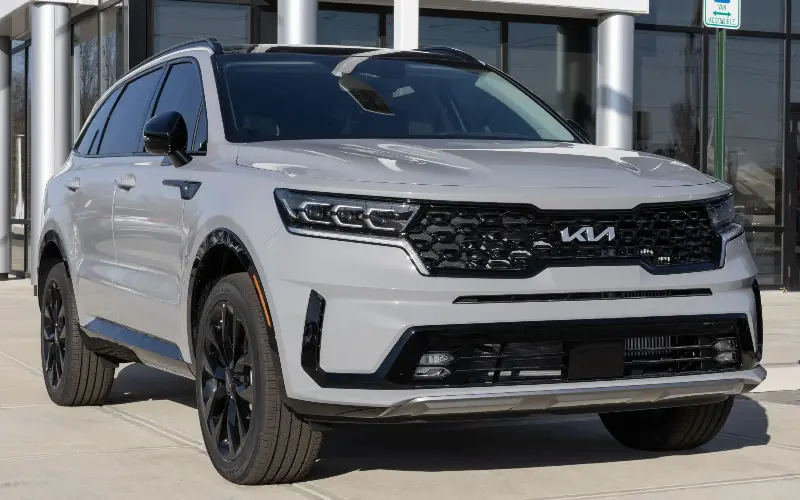
My final thought is a Kia Sorento. Granted, it lacks the premium badge of the BMW, but since you’re changing from a Hyundai, the Sorento will be of a similar quality.
And while it’s known for its hybrid powerplant, the latest Sorento is still offered with a diesel engine. For the same budget as the X5, you could get a 2023 2.2 CRDi 3 that’s chock full of equipment, with only 20,000 miles and four years of its manufacturer’s warranty remaining. Food for thought.
Why won’t used car dealers touch my Japanese-import Jaguar?
Dear Alex,
I am trying to sell my imported 2008 Jaguar XJ. It has done 34,450 miles and is in excellent condition, but only has a partial service history; I am told that there is no service history available from its time in Japan. No dealer has yet been willing to offer me a part-exchange price as they are nervous about the car’s resale value. What should I do? Have you any advice on where I can sell my Jaguar?
– RS
Dear RS,
Your question illustrates one of the pitfalls of buying a so-called “grey import” from Japan.
In the Nineties, the grey import trade sprang up mainly because enthusiasts desired rare and exotic Japanese performance models which were never offered in the UK.
Nowadays, however, the grey import market has broadened and there’s a strong trade in imported prestige brands, particularly Volvos, BMWs, Mercedes-Benzes and, yes, even Jaguars.
These Japanese Domestic Market (JDM) cars often lead cosseted, low-mileage lives on roads that aren’t treated with salt and therefore don’t suffer as much from corrosion.
By contrast, official UK-market cars from these prestige marques are often bought by high-mileage users and covered in salt each winter – as a result, a 20-year-old Japanese-market example is often in much better condition, with far fewer miles, than an equivalent UK example.
Why do such cars end up over here? Inspections on cars that are 10 years or older in Japan become much stricter. Because of high repair costs, it’s often more economically viable to sell the car cheaply to an exporter.
These exporters, of course, know that low-mileage, right-hand-drive cars will fetch a far higher price in the UK so it’s worth their while paying the shipping and registration costs.
The trouble is, as you’ve found out, a grey import is not quite the same as a UK car. For one thing, you’re lucky if you find a grey import that has any history of maintenance or accident repairs before it left Japan.
For another, most dealers still see them as something of a liability, as buyers tend to prefer a British-market car with a full history to a JDM one with only half its life (perhaps less) documented.
But you can still sell on a JDM car. Firstly, your car’s low mileage will undoubtedly appeal to an enthusiast more willing to overlook its JDM origins, so I’d suggest advertising it in Jaguar enthusiast magazines or with one of the larger Jaguar clubs, or perhaps on a more enthusiast-leaning classifieds site such as Pistonheads or Car & Classic.
If you’re not willing to entertain a private sale, the alternative would be to look at a JDM used car specialist. There are now quite a few of these dotted around the country and they are far more likely to offer a sensible part-exchange value, as they know how to market and resell the car. Search online for “JDM used car specialists” and call a few to see whether they’d be interested in buying your car for a sensible sum.