



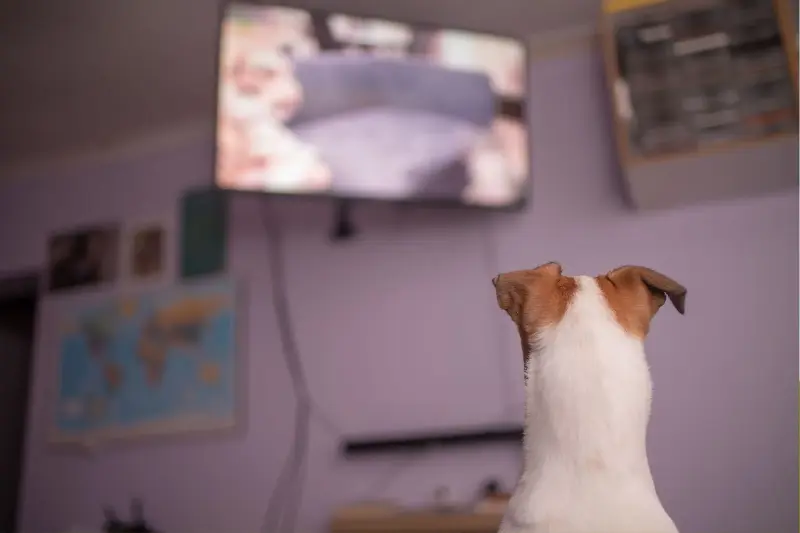
For many pet owners, turning on the television before heading out the door has become as routine as filling a water bowl, with some hoping the background noise will help comfort their dogs while they’re away.
But does television actually help soothe dogs when they’re alone? Or is it more for humans than their pets? Veterinary Behaviorist Dr. Christopher Pachel said the answer depends entirely on the dog.
Owners can flip to Animal Planet or tune into animal-specific YouTube channels, such as DOGTV, to curate a Netflix-esque, binge-watching experience. Speaking with Newsweek, Pachel explained what television can do for dogs, the signs that a pet may genuinely enjoy watching it and when screen time might be doing more harm than good.
Pachel views pet television as serving two primary functions for canines: background noise—what he describes as a “buffering agent” that can help mask sounds that might otherwise trigger a dog’s anxiety, such as thunderstorms, fireworks or construction—and a more individualized form of enrichment, where some dogs respond to sounds and visuals that capture their attention and keep them engaged while home alone.
5 Signs Your Dog Likes TV
One mistake owners often make, Pachel said, is assuming a dog enjoys television simply because it is marketed as canine entertainment. Whether owners have it on as background noise or to keep dogs entertained, he encourages owners to watch their dog’s body language.
Dogs that are enjoying television may orient themselves toward the screen, visually track moving objects or appear relaxed and curious while watching. Some may have a loose, wagging tail or they’ll display playful behavior, such as a bow, particularly when animal movement appears on screen.
However, engagement is not always positive. Some dogs may display signs of stress, including tense body posture, ears pinned back, a lowered head, wide eyes, lip licking, repeated yawning, crouching or a tucked tail.
“Don’t assume or project,” Pachel said. “Read your dog.”
He noted that reactions can vary even within a single viewing session. A dog may enjoy one scene and become uncomfortable during another, particularly if the sounds or visuals change suddenly.
Because of this, Pachel recommends “auditioning” television content over several days or weeks rather than assuming a single viewing tells the whole story.
What Does Research Say?
Research suggests Pachel’s observations may be reflected in dogs’ viewing habits, with interest levels varying significantly between individual animals.
A 2024 survey published in Applied Animal Behaviour Science found that movement on screens strongly attracts dogs’ attention, while videos featuring other animals, especially other canines, were the most engaging content. Researchers also found that age and visual status influenced how likely dogs were to interact with screens.
Meanwhile, a 2025 study in Scientific Reports found that dogs’ personalities appear to shape how they respond to television. More excitable dogs were more likely to follow moving objects on screen, while fearful or anxious dogs were often more responsive to sounds than visuals.
Can Dogs Get Too Much Screen Time?
Pachel is not particularly concerned about excessive television use for most dogs. The worry arises when screen time begins replacing core needs.
“If we see an interruption in their desire to go on walks, interact with owners, or engage in playtime, then we might ask whether we’re developing an unhealthy behavior,” he said.
He emphasized that dogs still need exercise, social interaction, training, sniffing opportunities, play and environmental enrichment. Television can supplement those needs, but should not replace them.
He added that age and activity level may also play a role in how dogs tolerate screen time. A senior dog, for example, may be more likely to settle with television than a highly active puppy.
“I don’t know if there is a number or cap on it, but I would caution owners that 2D visionary isn’t really going to tick all the boxes for most dogs,” he said. “It’s really everything in moderation.”
Programming Depends on the Dog
Once an owner determines whether their dog enjoys television, the next question becomes what to watch.
For dogs with separation-related distress, Pachel says human voices may sometimes be more comforting than nature programming. Talk shows, podcasts, or other conversational content can create a sense that someone is present.
Other dogs may prefer animal-focused programming or calming visual scenes. The key is observation.
“I would also encourage owners to use some sort of video monitoring,” he said. “What they like when the owner is there might not be what they like home alone.”
In the end, the question isn’t whether dogs like television—it’s whether the television is working for the dog in front of it.
Contact Newsweek editors on this story: Rebecca Flood and Gray R. Thomas