



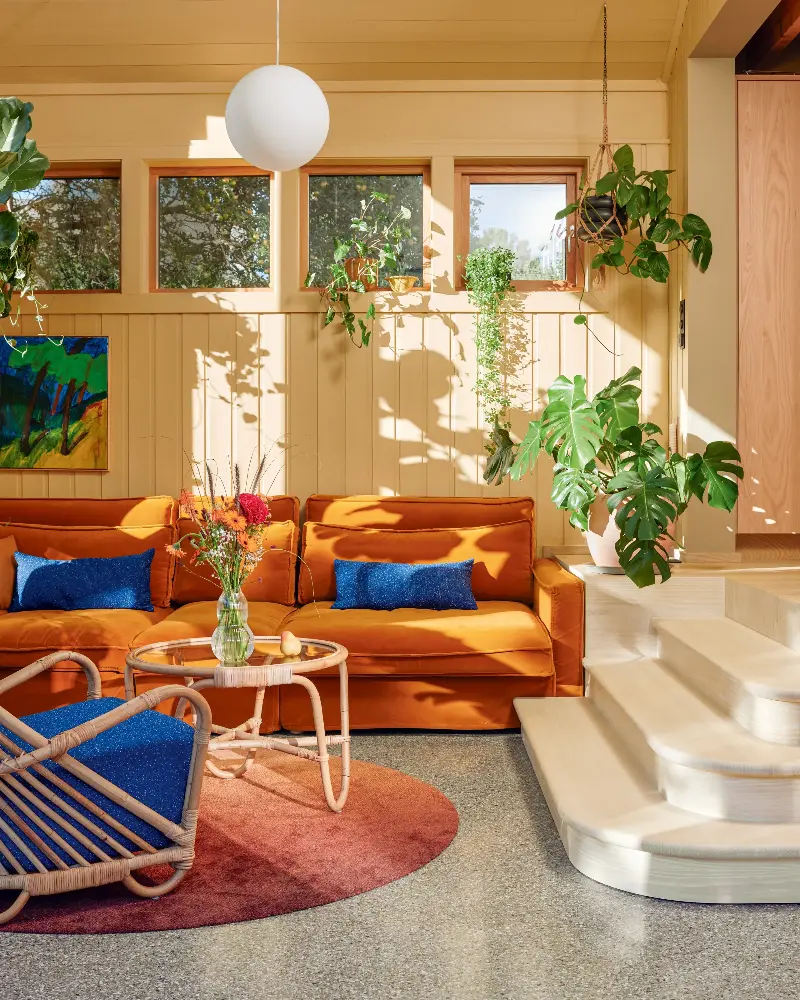
"When I saw the house, I said, 'What did you buy?'," says interior designer Astrid Kvistad of her initial response to her clients’ newly purchased 1950s home. The space was low-ceilinged, dark, and very awkwardly arranged.
But the decision had been a deliberate one. The house, set within an orchard, had been sold by an elderly couple to the young family of four, and the previous owners were keen that the property wouldn’t be broken up or overdeveloped, hoping instead that it would live on as a modern family home, making the most of its generous garden.
Inside, however, the house hadn’t been touched since it was built — so its small rooms and layout no longer suited modern life. "First, we were asked to help with the color," explains Astrid, one half of design studio Familien Kvistad, who had previously worked with her client redesigning his Oslo office.
"Then he said, 'We want to move the kitchen… and we should change the bathrooms, too.' It just became more and more. In the end, we changed every bit of the house — except the chimney — and everything was renovated from the inside."
The redesign began in 2019 and, says Astrid, "everything that could go wrong did go wrong — it was a long project." COVID hit, sending production and practical work into free fall; compounded by a building ban being imposed across the area, ruling out demolition, extensions, or any major additions.
Astrid embraced these new limitations. Her focus shifted to elevating the house within the existing footprint. She set about recladding the exterior, painting the wood in a soft yellow tone; the 1980s conservatory, which had been slapped on the side of the house, was reimagined and absorbed into the overall plan, blurring the boundaries between the house, terrace and garden.
Every single wall and door on the ground floor was removed to create a single, open-plan living space combining the kitchen, dining, and sitting areas.
Throughout the home, craftsmanship, color, and materiality were non-negotiables. "High-quality materials and custom-built furniture are a consistent, conscious choice for all aspects of the house," explains Astrid. The kitchen and the dining bench were made by Hamran, and the ash flooring came from Dinesen, its unusually wide planks laid like a puzzle. The window frames were reduced to slimmer fittings to let in as much light as possible.
A bespoke color palette transformed the walls and fireplace, which were previously tucked against a wall. It was re-established as the centerpiece of the ground floor and covered in yolk-yellow tiles. "We chose ochre Kaufmann tiles," says Astrid. "Even though the fireplace has clean lines and feels modern, we wanted it to carry a sense of history. When we removed the walls around it and relocated the kitchen, it ended up in the middle of the living space and is now the focal point."
If you squint, the 1950s home is still legible, with its wooden floors, glazed tiles and shifts of color from room to room. But with Astrid’s imaginative interventions, it feels tailor-made for the more modern way its new owners want to inhabit this traditional building.
If you love playful pops of color, then you'll love this cinematic home in Brooklyn, which was inspired by its owners' joyful, celebratory Sephardic Jewish culture.