


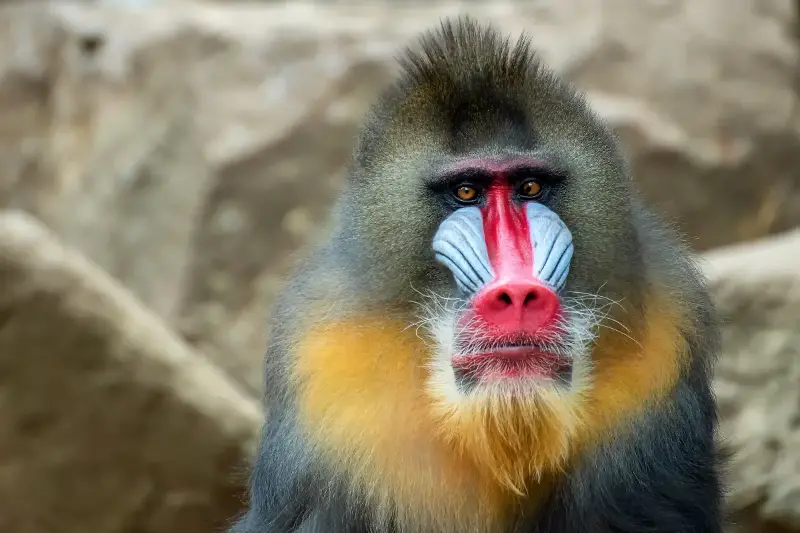
There is a primate that stands out in the lush rainforests of Central Africa, not just for its intelligence or social antics, but for its dazzling appearance. Meet the mandrill, nature’s most flamboyant masterpiece and a remarkable character of jungle life. It’s not just the colors on a mandrill’s face that captivate; it’s the intricate web of behavior, family bonds, and survival tactics that make this primate one of the most fascinating animals on the planet.
THE AMAZING COLORS OF THE MANDRILL
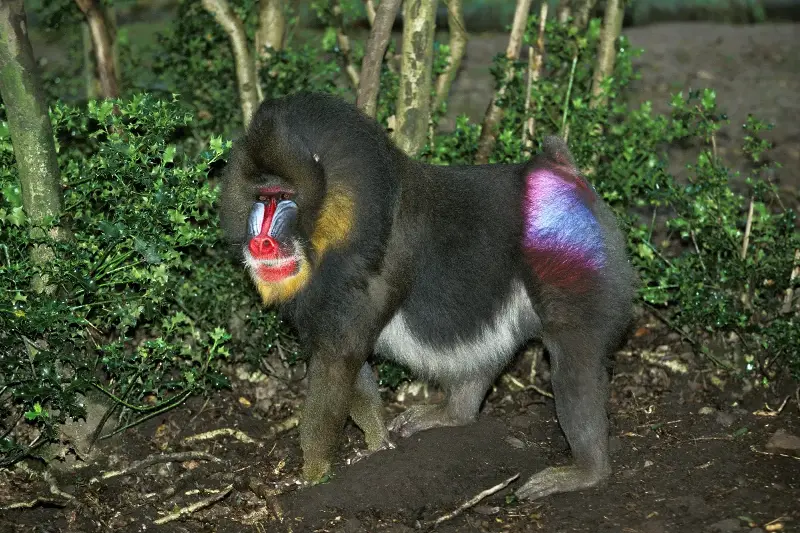
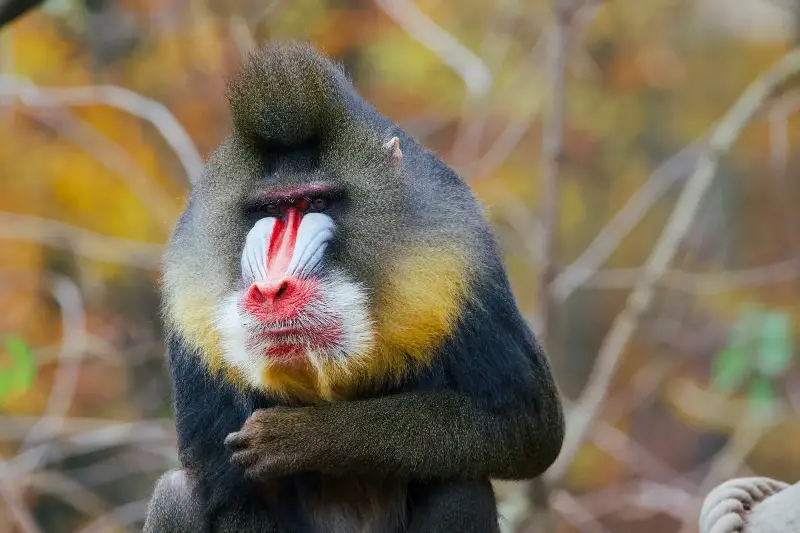
Step into the world of the mandrill, and you’re greeted with one of the most vibrant spectacles in nature. Male mandrills are iconic for their electric blue and crimson snouts, bright yellow beards, and rainbow-hued rumps. These features aren’t just for show—they have evolved with a specific purpose:
- Social Rank: The more vivid and saturated the colors, the higher the male’s social standing.
- Mating Success: Brightly colored males are significantly more successful at attracting mates.
- Emotional Indicator: During moments of excitement or dominance displays, these colors actually intensify.
This dazzling display is possible thanks to unusual skin cells and a special pigment arrangement, rather than just fur color. Scientists believe the mandrill’s vivid colors are among the most intense seen in any mammal, turning the mandrill into a living, moving piece of art within the forest.
A COMPLEX SOCIAL WORLD
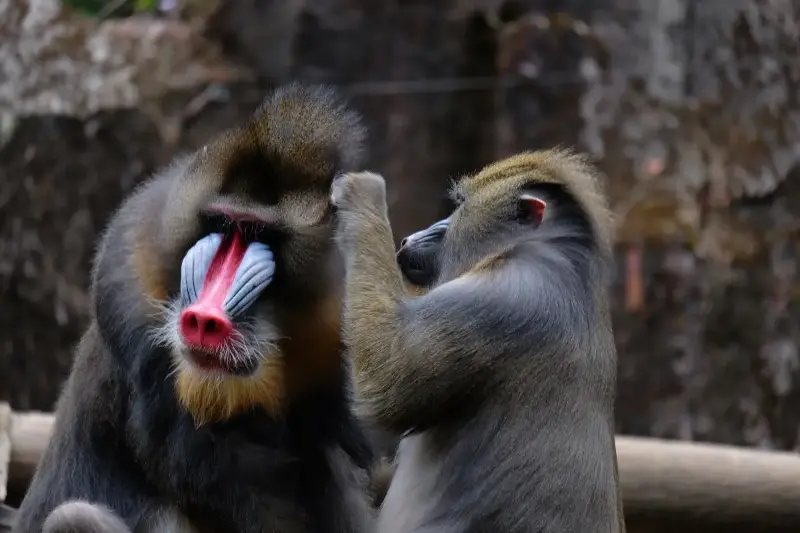
Behind the mandrill’s mesmerizing face lies a brain as intriguing as its appearance. Mandrills live in some of the largest groups found among primates—sometimes called “hordes”. These supergroups can include hundreds of individuals, creating a rich tapestry of relationships built on:
- Grooming and Alliances: Essential for maintaining peace and building trust.
- Matrilines: Female mandrills form the backbone of the group, staying together for life in close-knit family lines.
- Dominance Hierarchies: Males often wander between groups, vying for the "alpha" position to gain preferred access to females.
Watching a mandrill group interact is like seeing a live performance of social drama, where small gestures, subtle glances, and specific calls dictate everything from friendships to feuds.
JUNGLE LIFE AND SURVIVAL TACTICS
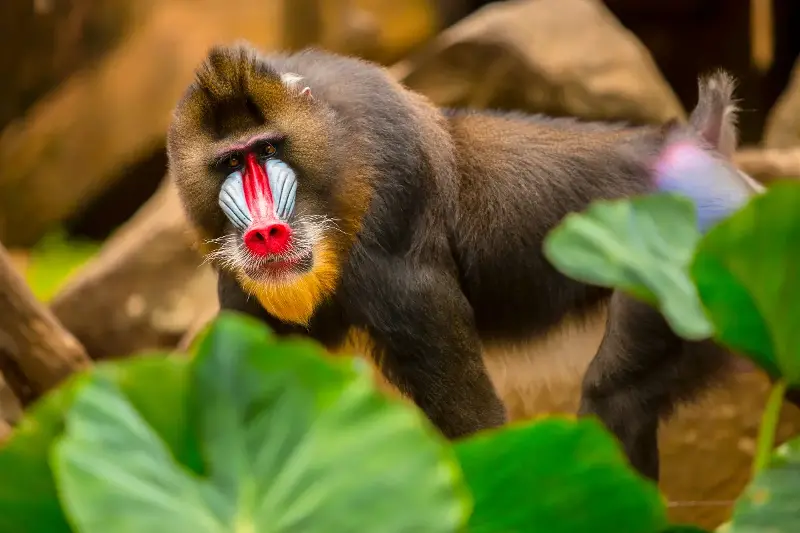
Mandrills make their homes in the dense rainforests of southern Cameroon, Gabon, Equatorial Guinea, and Congo. Their world is one of perpetual green, dripping with vines and dotted with towering trees.
As versatile omnivores, they possess a diverse diet. Using their strong, dexterous hands, they forage for:
- Fruits, seeds, and nuts (which they can crack open with ease).
- Roots and fungi dug up from the forest floor.
- Insects and small animals for protein.
Though they possess sharp canine teeth—often mistaken as a sign of aggression—they are generally shy. They rely on their agility and intelligence to escape predators like leopards and large snakes.
UNIQUE COMMUNICATION AND CLEVER TOOLS
Life in the jungle demands sharp senses. Mandrills have developed an impressive array of communication techniques, including grunts, hoots, and barks. A deep, rumbling vocalization can move through the thick undergrowth to signal danger or keep the troop together while foraging.
Interestingly, mandrills have been observed using tools, demonstrating a level of intelligence that surprises researchers. They may use sticks to probe for insects or even to clean their nails—a small reminder that the distance between humanity and our primate cousins is smaller than we think.
MANDRILLS IN POPULAR CULTURE AND CONSERVATION
You might recognize the mandrill from "The Lion King"—the character Rafiki was loosely based on them, though with some artistic liberties. While they inspire folklore as symbols of wisdom and mischief, they face growing challenges in the wild.
Habitat loss and hunting have pushed this species closer to vulnerable status. Conservation groups are working to protect safe habitats, utilizing responsible ecotourism and education to shine a spotlight on these "jungle jewels".
Today, spotting a mandrill in the wild is a rare treat. Every ripple of blue and red on their face is a testament to the wonders of evolution and the ongoing story of life in the heart of Africa’s greenest forests.